
What Actually Makes Someone Sexy?
We like to say attraction is about humour, intelligence and personality. But first, we look. So what actually makes someone sexy — and why does it differ so much from one person to another?


We like to pretend attraction is more sophisticated than it is.
Ask people what makes someone sexy and they will usually mention humour, intelligence, kindness, confidence, curiosity, presence. All true. But before any of those qualities have had much time to appear, something much faster has often already happened.
We looked.
We felt something.
Or we did not.
We are surprisingly reluctant to admit how physical attraction works. We say looks aren’t everything — usually after choosing who gets the chance to show us everything else.
Dating apps make this contradiction almost embarrassingly visible. People complain, often rightly, that Tinder and Bumble reduce attraction to a few photographs, yet they continue swiping according to those photographs. A face, a body, a smile, a style, perhaps ten seconds of information. Someone advances to the next round or disappears forever.
Research on dating apps tends to confirm what the interface already suggests: perceived physical attractiveness has a strong influence on dating intention, even when other qualities such as trustworthiness are also being evaluated. In one experiment involving Tinder profiles, making photographs appear more attractive increased participants’ willingness to date the person, even though the same manipulated photographs reduced perceived trustworthiness.
Looks clearly matter.
The more interesting question is what we mean by looks.
Everyone has a private sexy radar
Physical attraction is not the same thing as conventional beauty.
Most of us know someone who is objectively beautiful and does absolutely nothing for us. We also know the opposite: a person who might never be cast in a perfume campaign but whose face, body, smile or way of moving immediately produces a reaction.
There seems to be a private radar at work.
It might respond to broad shoulders, narrow shoulders, softness, angularity, a certain kind of nose, wrinkles around the eyes, long hair, short hair, a particular body shape, hands, teeth, posture or something so specific we would struggle to describe it.
Often, we do not know our own formula until someone activates it.
That helps explain why “attractive” and “sexy” are not interchangeable. Beauty can be admired almost aesthetically. Sexy is more personal. It contains an invitation, even if the invitation exists entirely in our own imagination.
And while culture clearly influences what we learn to consider desirable, individual attraction remains stubbornly idiosyncratic. Research on romantic preferences repeatedly finds a gap between the qualities people say they want and the people who actually generate attraction when they meet them. In speed-dating studies, stated ideals often predict real-life romantic interest much less neatly than we might expect.
Apparently, our conscious list of preferences is not always in charge.
Dating apps expose our little contradiction
This is one reason complaints about superficial dating apps are slightly complicated.
The apps absolutely intensify appearance-based judgement. They remove voice, movement, smell, social context, chemistry and almost everything else that can transform attraction in real life.
But they did not invent our interest in appearance.
They simply built an interface around it.
What feels slightly uncomfortable is how quickly that interface reveals the hierarchy. We may sincerely believe that intelligence, warmth and humour matter enormously, but the attractive stranger often gets the opportunity to demonstrate those qualities before the unattractive stranger does.
That does not mean everyone wants the same face or body. Quite the opposite. The physical “yes” can be highly personal.
But pretending the physical component is somehow primitive while the rest of attraction is noble and meaningful does not help much. Desire is physical before it becomes philosophical surprisingly often.
The interesting part begins when the person starts moving.
A body acquires a personality
A photograph freezes someone at precisely the moment attraction is still missing most of its information.
Then comes the voice.
The laugh.
The way someone listens before answering. The speed at which they speak. The way they walk into a restaurant. The expression that appears when they are amused. The way they touch another person’s arm, pronounce a certain word, hold eye contact for half a second longer than expected.
Smell can matter enormously. So can humour, intelligence and the particular kind of attention someone gives us.
Suddenly a face we initially considered ordinary becomes attractive.
Sometimes the opposite happens too. A spectacularly beautiful person begins speaking and, within minutes, something quietly switches off.
We often talk as though physical attraction and personality are separate categories, but real attraction does not respect the border very well. Personality starts changing how the body itself is perceived.
Someone’s smile becomes sexy because we now know what makes them laugh. Their eyes become attractive because we know the expression they make before saying something mischievous. A voice becomes associated with intimacy. A body gathers memory.
The physical remains physical, but it is no longer neutral.
Confidence is sexy. Except when it really isn’t.
Few pieces of dating advice are repeated as confidently as the idea that confidence itself is attractive.
Sometimes it certainly is. Ease can be magnetic. Someone who seems comfortable in their body and does not constantly seek approval can make other people feel comfortable too.

But confidence is not a universal aphrodisiac.
For some people, very confident people create distance. They can feel intimidating, polished or simply difficult to approach. A trace of nervousness may have the opposite effect: it makes the person feel reachable.
There can be something extremely attractive about a person who loses their train of thought slightly, blushes, hesitates before speaking or does not seem entirely certain of their effect on the room.
Not because insecurity itself is desirable, but because vulnerability can create proximity.
Some of us are drawn not to confidence, but to the tiny cracks in it.
This is where universal lists of “sexy traits” become fairly useless. The quality that pulls one person closer may push another away. Power can excite one person and repel someone else. Mystery can feel seductive or exhausting. Boldness can read as charisma or arrogance.
Sexy depends partly on who is looking.
Attention may be one of the least visible forms of attraction
There is another quality photographs cannot capture: how someone makes us feel when their attention lands on us.
It is difficult to separate being attracted from feeling attractive.
Someone remembers something we said three days earlier. They notice a small change. They laugh particularly hard at our joke. Their attention feels slightly more concentrated when we speak.
Nothing dramatic has happened, yet the temperature changes.
This does not necessarily mean the person is objectively more attractive than everyone else in the room. It means something has become relational.
Attraction begins travelling in both directions.
This may be why being desired can alter our own behaviour so quickly. We become funnier, more relaxed, bolder. We stand differently. We suddenly remember that our body can be interesting to someone.
The person in front of us has not merely become sexy.
We have become slightly sexier in their presence.
What does my desire say about me?
There is an even more interesting question hiding underneath all this.
Why this person?
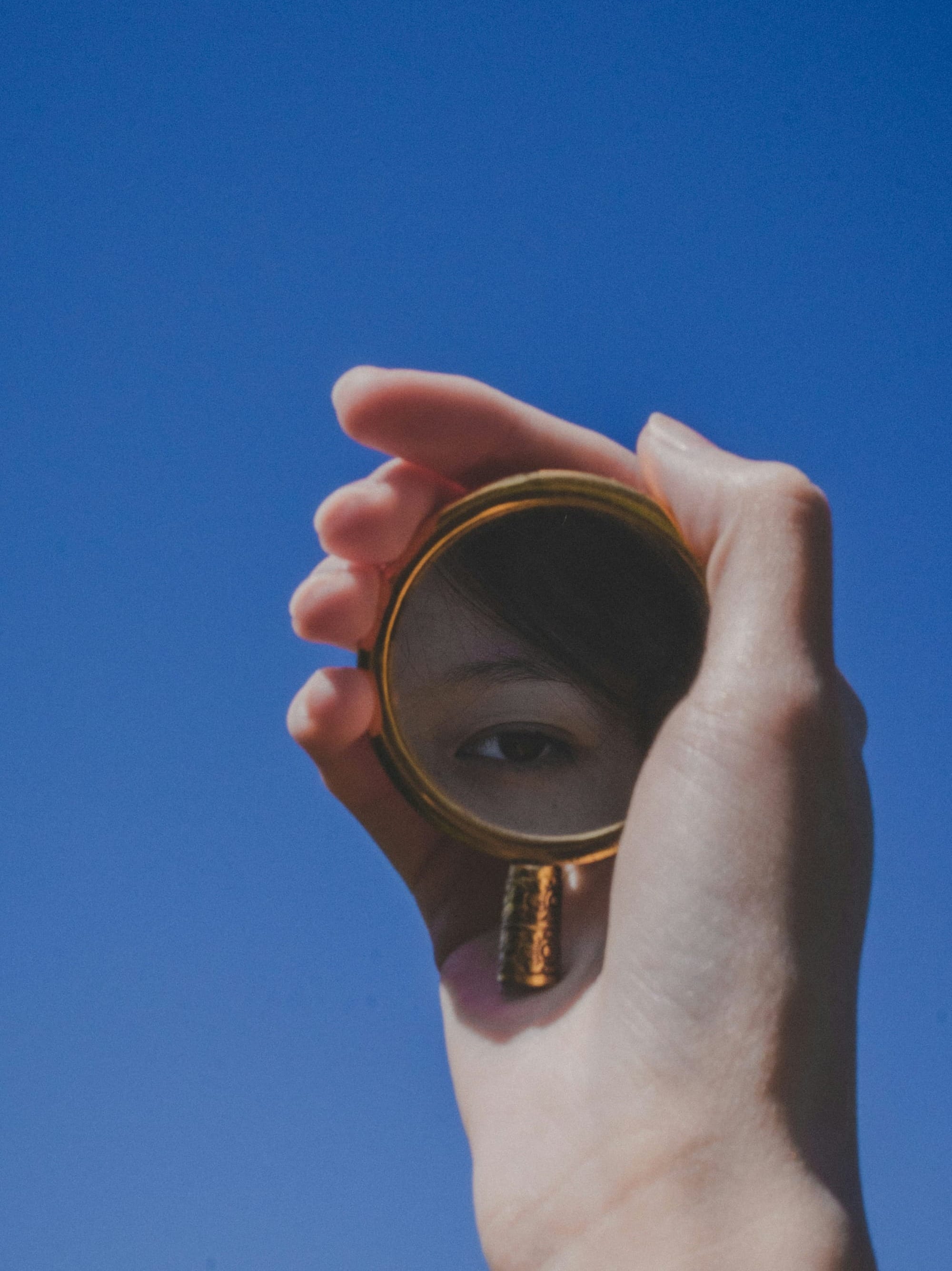
Why this particular combination of face, voice, vulnerability, confidence, status, intelligence, softness or danger?
What does being attracted to them allow us to feel about ourselves?
Desire is not necessarily a psychological confession, and there is no reason to turn every crush into therapy. But attraction can sometimes reveal what we admire, what we lack, what we want to become, or which version of ourselves we enjoy inhabiting.
A very powerful person may make someone feel protected. A shy person may make someone else feel safe. Someone intellectually brilliant may make us feel stimulated; someone playful may make us feel less serious. Wealth, rebellion, elegance, kindness, fame, physical strength, artistic talent and vulnerability can all become sexy partly because of the meanings we attach to them.
The question is not simply What do they have?
It is also: Who do I become around them?
That may explain why attraction can make very little sense from the outside. Other people see the person. We experience the relationship between that person and our own imagination.
Sexy happens between people
So what actually makes someone sexy?
The body matters, sometimes enormously. It would be dishonest to pretend otherwise.
But the body is only the beginning of the information.
Then voice, smell, humour, intelligence, confidence, vulnerability, movement, attention and context begin modifying what we see. Attraction becomes less like a fixed characteristic and more like an exchange.
And eventually, someone who seemed merely attractive becomes sexy because of what happens when they enter our orbit.
They make us curious. They make us slightly nervous. They make us want to move closer. Perhaps, more importantly, they make us feel different in our own skin.
The sexiest person is not the one who looks best from across the room, but the one who changes the way you feel inside it.
That is something no profile picture can quite show.
What makes someone sexy to you that would never appear on a dating profile?
And has someone ever become much more — or much less — attractive once you actually got to know them?
Odeesy explores the conversations we often have in private about love, desire and modern relationships.